Yosano Akiko - A Poet, Author, & Social Reformer
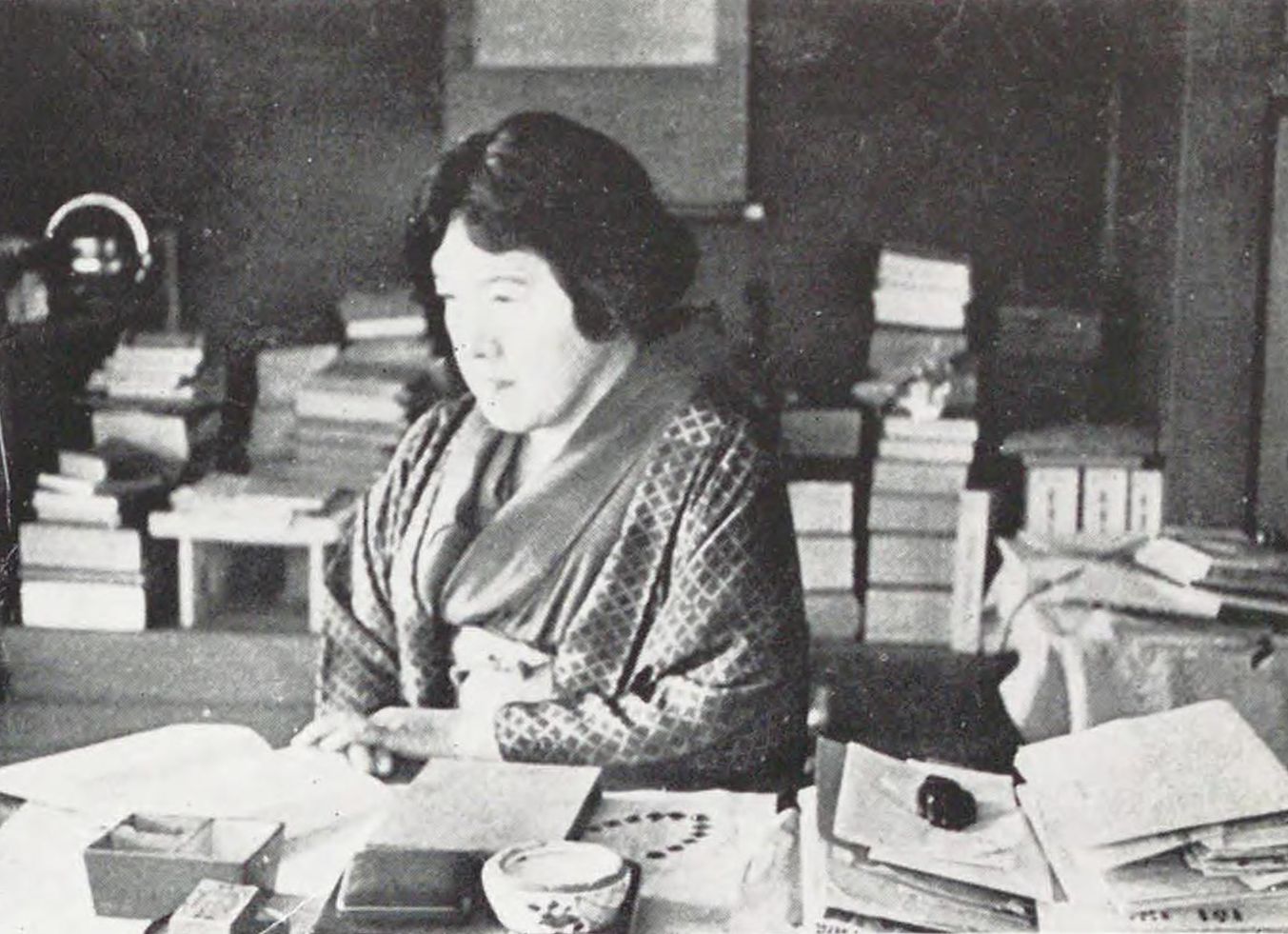
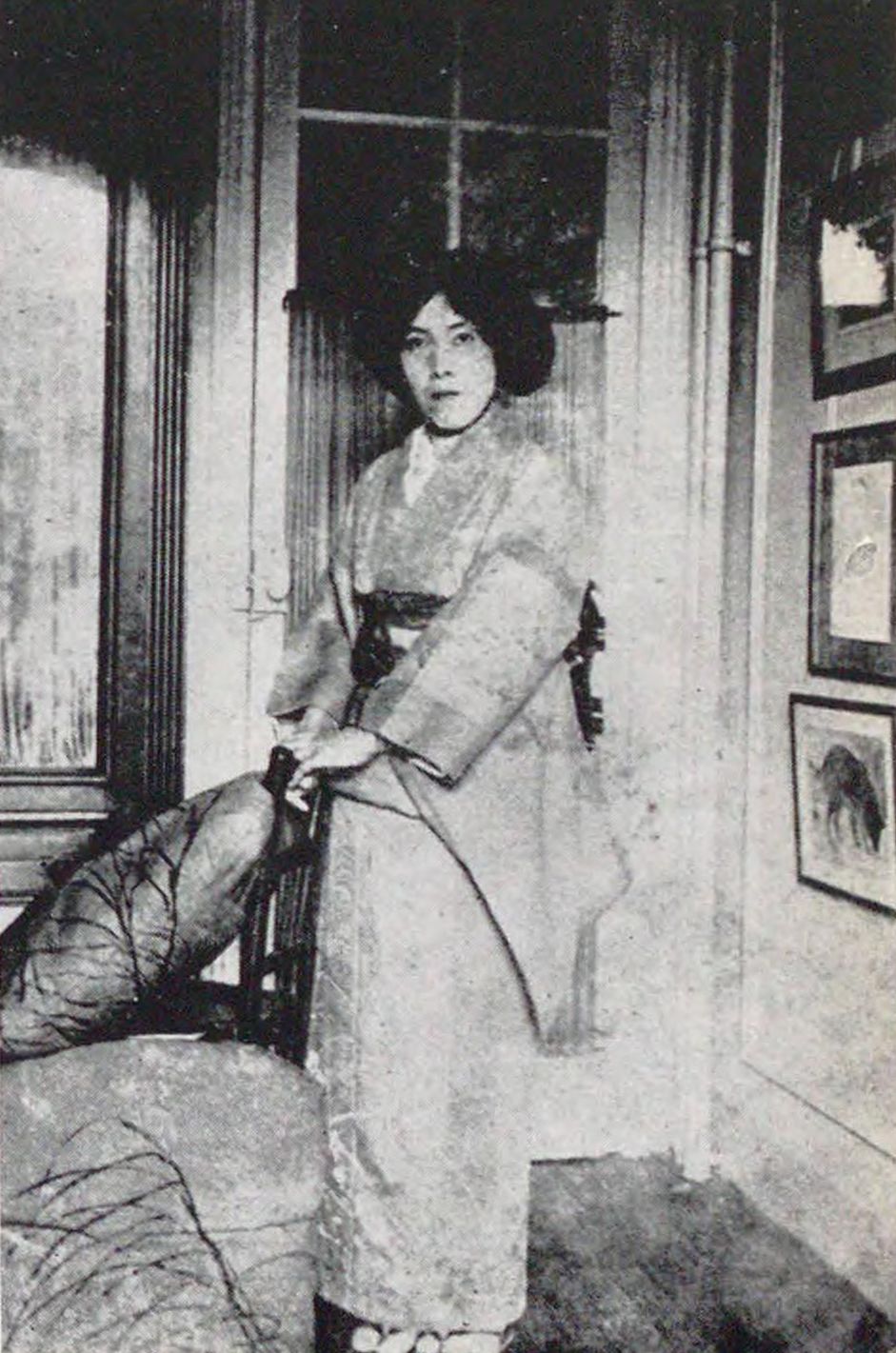
Yosano Akiko—born near Ōsaka, Japan in 1878—was a prolific writer known for her sexual and provocative tanka poems. Akiko’s most notable work, her Midaregami (Tangled Hair), is often credited as one of the most influential publications in Japanese twentieth-century literature. Through this collection of 399 tankas, Akiko challenged gender norms by writing candidly about love, longing, and sensuality—topics considered inappropriate for women to discuss in Meiji Era Japan.
Despite its relative popularity, the Midaregami only represents a small portion of her work. Over the course of her life, Akiko wrote over 50,000 poems (publishing twenty-one poetry collections), produced two translations of The Tale of Genji into modern Japanese, and drafted a variety of essays and social and political criticism. These other texts, while not the main focus of this project, demonstrate Akiko’s shift toward reform and pacifism in the mid-twentieth century. We, however, will look more closely at the text that first brought Akiko into the literary sphere: Midaregami (or, more specifically, one translation of Akiko’s poems).
Project Objectives
This TEI project, powered by GitHub and EditionCrafter, attempts to preserve Yosano’s legacy by digitizing all 399 of her Midaregami tankas while also exploring the complexity of translation studies as a field. In addition to the digitization goal, I aim to shed light on translation differences between Reichhold and Kobayashi’s text with two the aforementioned other translations. With the rise of AI/Large Language Models, students increasingly turn to automated translation services, prioritizing efficiency over stylistic, individual decisions; therefore, discussions about how translation differences are made and what impact they have over a tanka’s affect could allow students opportunities to explore AI possibilities while also exposing its shortcomings.
“My poems are my diary” - Yosano Akiko (Beichman 2).
Why the Midaregami? Why This Translation?
Although Akiko would eventually express her discontent with Midaregami, this 1901 publication revitalized tanka poetry (a traditional Japanese poem style characterized by a 5-7-5-7-7 syllabic structure) through its “rich and suggestive imagery” that sparked significant discourse (FIREBIRD 6). According to (JONES), one critic of Midaregami went so far as to claim that these Akiko’s tankas were “immoral words that belong in the mouths of whores and streetwalkers” (376). By our modern standards, Akiko’s gendered, sexual word choice is hardly obscene, but her collection of tankas challenged the norms of Japanese literature and women writers’ contributions to the field. It is an important collection, and it is the basis for any in-depth study of Akiko’s contributions to Japanese literature as a whole.
A handful of translations of Akiko’s Midaregami exist already, but the edition selected for this project (trans. Jane Reichhold and Machiko Kobayashi, 2013) is the first English translation of all 399 tankas included in the original publication. This version, entitled A Girl with Tangled Hair, offers romantic, digestible interpretations of the Japanese tankas, differing significantly from the translations that came before it.
Navigation
Under the “Editions” tab, this webpage offers the Japanese kana (labeled as “Facsimile”), Romaji transliteration, and Reichhold and Kobayashi translation of Akiko’s 399 tankas published in her Midaregami.
Alongside the 399 English tankas produced by Reichhold and Kobayashi), this project incorporates ten translations from Dennis Maloney’s and Hide Oshiro’s Tangled Hair: Selected Tanka of Yosano Akiko (2012) and another ten from Sam Hamill’s and Keiko Matsui Gibson’s River of Stars: Selected Poems of Yosano Akiko (1996).
The “Translations” dropdowns of 10 of the 399 tankas present all three translations back-to-back, as well as translations provided by ChatGPT and Google Translate (the remaining 389 tankas each have just the Reichhold and Kobayashi translation). These tankas have an additional tab for a closer analysis of the differences between each translation, labeled “Discussion.” The Japanese kana is held under the “Facsimile” dropdown, and the Romaji transliteration is found in a dropdown of the same name. Stylistic decisions in the translations are marked with forward slashes (/) for italics and square brackets for quotations.